By Malee Gunaratne | May 13, 2026
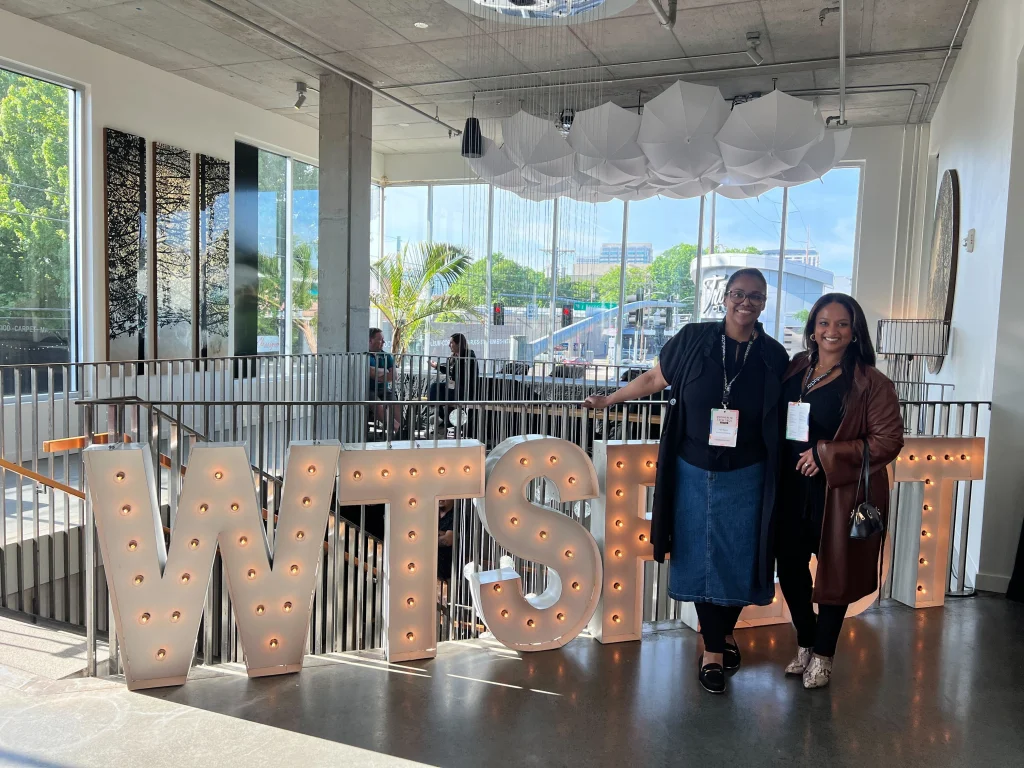
I attended WTSFest in Portland recently, a global conference hosted by Women in Tech SEO that brings together marketers across the industry for a single-track day of sessions, conversations, and community. I went in ready to learn. What I found was something directly useful to the consulting practice I am building: marketing-native thinkers who had mapped the same marketing systems concept I had been building from the operational side of the industry.
Id & Ethos was founded with the idea that marketing has been treated as a creative discipline when it is actually a scientific systems discipline.
I spent over a decade inside environments where systems were not optional. Semiconductor production floors. Supply chain operations. Logistics infrastructure built from scratch. When something broke in those environments, you did not reach for a new campaign. You diagnosed the system.
In semiconductor manufacturing we called it RCCA. Root Cause and Corrective Action. You traced the problem to its source, documented it, fixed it, and verified the fix held. That methodology shaped how I think about every broken system I encounter, including marketing ones.
The reason marketing fails is not bad ideas or bad execution. It is the absence of structure underneath both. And the reason that absence persists is that marketing has a cultural tolerance for operating without infrastructure that no other business function would accept.
No operations team runs without documentation. No supply chain runs without process. No production floor runs without a system that holds when conditions change. Marketing does all three constantly, and then wonders why the results are inconsistent.
A Career Built from Systems Thinking
My professional background is not a straight line. My bachelor’s degree was in Journalism and Advertising, and then I spent over a decade across semiconductor manufacturing, supply chain software, enterprise account management, and marketing operations. I started in a high-tech production floor environment, moved into supply chain project management, and landed as the first dedicated marketing PM at a logistics software company.
When I launched a diagnostic-first marketing consultancy, I built it around something repeated across every corporate environment I had worked in: systems thinking. It is not just relevant or exclusive to operations, it is essential to executing cleanly and efficiently in any environment. Marketing is no different, and bridging that gap between scientific execution and creative expression is exactly the work I do.
Inside the WTSFest Sessions
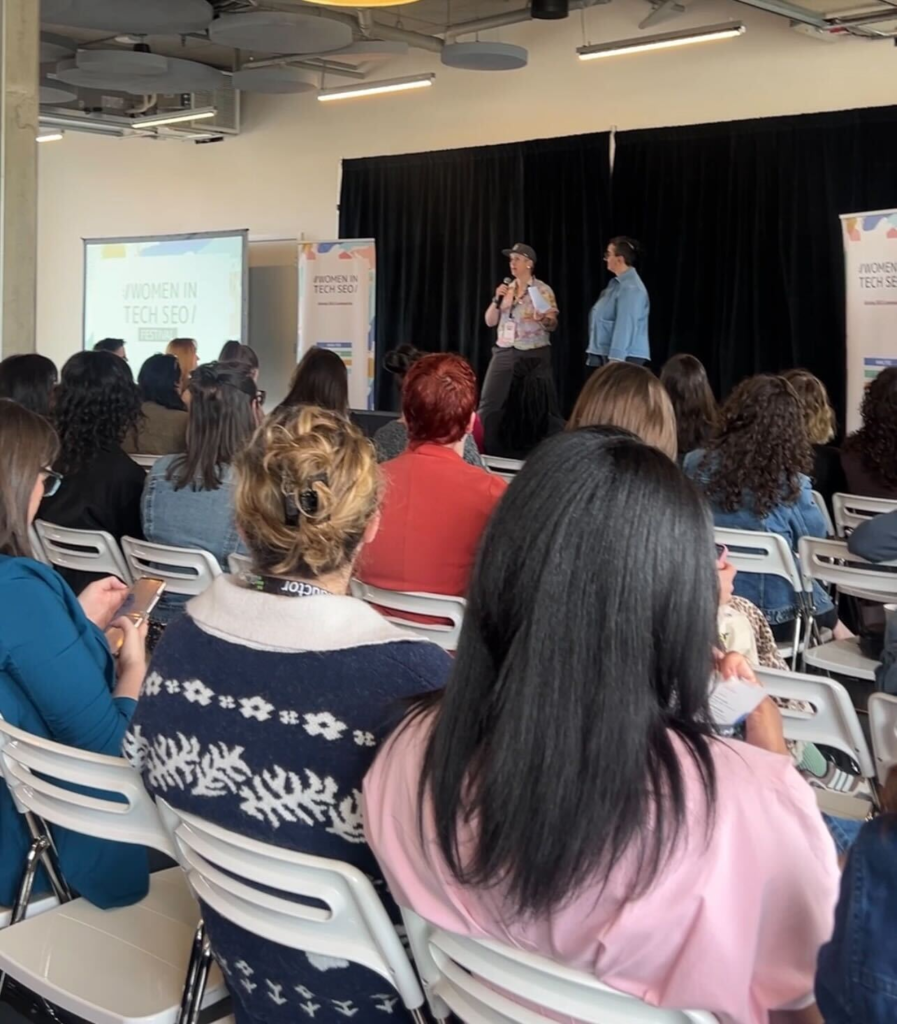


Two sessions in particular stood out at WTSFest. Not because the speakers said anything I had never heard. But because these marketing-native thinkers had arrived at the same conclusion from a completely different direction than I did, adding depth and dimension to my own practice.
Raycheal Proctor, founder and strategic director at Unlimited Mixed Marketing, built her entire talk around a premise central to how I work: you cannot set a meaningful goal until you understand the state of the system you are working in. She walked through three marketing systems most organizations inherit, and once labeled, they are hard to ignore: tried and true, something new, always in repair. Then she showed how each one creates its own brand of chaos when it meets external pressure. Budget changes. Leadership shifts. Platform disruptions. Talent turnover. Her argument was not that these pressures are avoidable. It is that a structurally sound marketing system can hold weight when they arrive, because it was built to.
Tess Voecks, VP of Operations at RicketyRoo, took that idea into the operational layer and gave it five pillars: product, project management, communication, culture, and finance. She opened with a story about an agency that brought her in to consult, lost 70% of their recurring revenue within six weeks, and closed their doors two months later. Their problem was not a lack of talent. It was ten years of operational debt that no amount of good work could overcome in time. Her point was simply this: clean and clear operations are not optional.
I have seen both of these failure modes up close. In manufacturing, we called it tribal knowledge: a system running without documentation is institutional memory waiting to walk out the door. In supply chain, a process that only one person understands is not a process at all. In marketing, the same rules apply. But marketing has a longer cultural tolerance for operating without structure, without ownership, without a system that holds when the conditions change. That tolerance is exactly what makes the failure mode so hard to see coming.
Marketing has long been perceived as the creative counterpart to the hard sciences, more intuition than infrastructure, more campaign than system. That perception is expensive and is exactly what allows structural negligence to persist. The most effective marketing systems operate at the intersection of creative thinking and operational precision. When you treat it as only one or the other, you get either rigid processes with no resonance or brilliant ideas with no foundation to run on. Neither holds.
The most rigorous practitioners in the marketing space are arriving at the same conclusion I arrived at from the operational side of the industry, just from a different direction. That convergence is not coincidence. It is what happens when a gap demands to be solved.
At Id & Ethos, that is what I help small businesses overcome.
Let’s Get Into It
Starting next week, I am kicking off a 10-part series on what a functional marketing system actually looks like. Each post goes one level deeper, from diagnosis to build to scale, breaking down the principles so you can follow along and apply it as you go.
Here is where we are going:
- What Is a Marketing System? The definition, what makes one work, and how to tell if you have one.
- The System You Already Have. How to read the marketing infrastructure you are already working with, because you have one whether you built it intentionally or not.
- Why Marketing Systems Break. The failure modes, why they are so hard to see coming, and what they cost.
- The Structural Requirements. The conditions that have to exist for a marketing system to hold, and what happens when one is missing.
- Campaigns: Building for Change Before Change Builds You. How to build campaigns that survive budget shifts, talent turnover, and platform disruptions.
- Who Actually Owns Your Marketing Data. The difference between the foundation you own and the infrastructure you are borrowing, and why it matters more than you think.
- The Operations Layer You Didn’t Know You Needed. The infrastructure most marketers skip and what happens when you do.
- Culture for Operations: Solve for Adaptation. Why culture is an operational problem, not an HR one.
- Is Your System Actually Working? How to measure what actually matters and stop optimizing for the wrong things.
- Scaling Without Breaking: Sustainable Marketing Growth. What sustainable growth looks like when the system underneath it is sound.
This is not theory. It is the framework I apply with every client, drawn from a career spent inside systems that could not afford to fail.
If you have been running your marketing on instinct, on urgency, or on whatever worked last quarter, this series is for you.
If you are a founder or business owner:
You are probably the one holding the marketing function together right now. That means when something breaks, it lands on you. Before you hire, before you outsource, before you run another campaign, it is worth asking: do I actually have a marketing system, or do I have a collection of things I do? That question is where this series starts.
If you are on a marketing team:
You know what it feels like to work inside a system that was never designed. The fires, the unclear ownership, the KPIs that do not connect to anything leadership actually cares about. This series will give you language and frameworks to name what is broken and make the case for fixing it.
Malee Gunaratne is the founder of Id & Ethos Marketing Consulting, a diagnostic-first consultancy serving small businesses.